 CloudConsole
CloudWatch alarm: PrivateLink (AWS/PrivateLinkEndpoints) PacketsDropped
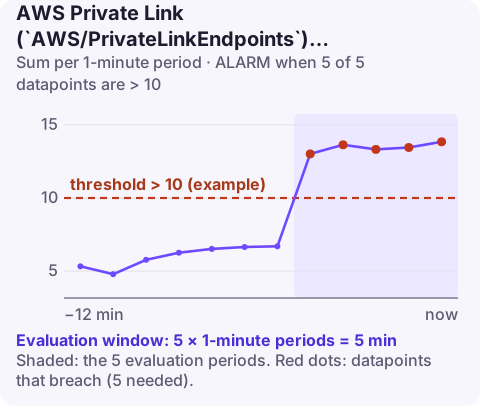
Alarm on AWS/PrivateLinkEndpoints PacketsDropped with the VPC Id, VPC Endpoint Id, Endpoint Type, Subnet Id and Service Name dimensions, Sum over 60 seconds, above your threshold for 5 of 5 minutes. Dropped packets at an interface endpoint usually mean oversized packets or an unhealthy endpoint service, and a low threshold gives you time to react before clients see failures.
What the metric measures
Interface VPC endpoints publish metrics from the consumer side of PrivateLink. PacketsDropped counts packets the endpoint discarded. Because the dimension set includes Subnet Id, there is one series per endpoint network interface, which means one per Availability Zone the endpoint is deployed in.
Two causes come up again and again:
- Packet size. Packets larger than 8,500 bytes arriving at the endpoint are dropped. Instances using jumbo frames (MTU 9001) and relying on path MTU discovery can produce these.
- The service behind the endpoint is unhealthy. If you consume a partner's or another team's endpoint service, problems on their Network Load Balancer or targets surface on your side as drops and failed connections.
Recommended alarm settings
| Setting | Recommended value |
|---|---|
| Namespace | AWS/PrivateLinkEndpoints |
| Metric | PacketsDropped |
| Dimensions | VPC Id, VPC Endpoint Id, Endpoint Type, Subnet Id, Service Name |
| Statistic | Sum |
| Threshold | Depends on your situation (set low; see below) |
| Period | 60 seconds |
| Datapoints to alarm | 5 |
| Evaluation periods | 5 |
| Comparison operator | GreaterThanThreshold |
The dimension names contain spaces and must be quoted on the command line. Get the exact values your endpoint reports rather than guessing them:
aws cloudwatch list-metrics \
  --namespace AWS/PrivateLinkEndpoints \
  --metric-name PacketsDropped \
  --dimensions "Name=VPC Endpoint Id,Value=vpce-0123456789abcdef0"
Choosing the threshold
For endpoints carrying critical traffic, set the threshold low so you hear early: start from the highest one-minute Sum you see over two weeks of normal operation, add a margin, and stay well below the level where clients would notice. If history is zero, a threshold of 0 or a small number such as 10 is reasonable. Endpoints for bulk or retry-tolerant traffic can carry a higher threshold.
Since each subnet is a separate series, either create one alarm per subnet, or one metric math alarm that adds them together. Per-subnet alarms tell you which AZ is affected.
Create the alarm
aws cloudwatch put-metric-alarm \
  --alarm-name vpce-payments-packets-dropped-az-a \
  --alarm-description "Packets dropped at payments endpoint in subnet A" \
  --namespace AWS/PrivateLinkEndpoints \
  --metric-name PacketsDropped \
  --dimensions "Name=VPC Id,Value=vpc-0123456789abcdef0" "Name=VPC Endpoint Id,Value=vpce-0123456789abcdef0" "Name=Endpoint Type,Value=Interface" "Name=Subnet Id,Value=subnet-0123456789abcdef0" "Name=Service Name,Value=com.amazonaws.vpce.eu-west-2.vpce-svc-0123456789abcdef0" \
  --statistic Sum \
  --period 60 \
  --evaluation-periods 5 \
  --datapoints-to-alarm 5 \
  --threshold 10 \
  --comparison-operator GreaterThanThreshold \
  --treat-missing-data notBreaching \
  --alarm-actions arn:aws:sns:eu-west-2:123456789012:oncall-alerts
Replace each dimension value with exactly what list-metrics returned; if one value differs, the alarm watches a metric that does not exist and stays in INSUFFICIENT_DATA.
When it fires
- Check packet sizes: if clients use jumbo frames, test with a smaller MTU on the client or make sure ICMP needed for path MTU discovery is allowed.
- Check the provider side: if the endpoint service is yours, look at the NLB's healthy host count and the service's RstPacketsSent; if not, contact the provider.
- Compare subnets: drops in one AZ only suggest a zonal target problem on the provider's load balancer.
- Check network rules: security groups on the endpoint interfaces and network ACLs on the subnets, plus private DNS resolving to the endpoint.
Questions
Why are packets dropped at my VPC interface endpoint?
Most often packets over 8,500 bytes, or problems with the endpoint service behind it. Check MTU settings and the provider's load balancer health.
Do gateway endpoints for S3 and DynamoDB publish this metric?
This namespace covers endpoints that create network interfaces in your subnets. Check list-metrics in your account to see which endpoints report.
PrivateLink problems often look like a dependency timing out, so knowing which endpoint and AZ is affected saves time. CloudConsole, a phone app for AWS, is built to show alarms like this with their dimensions on your phone.
Did it start after a deploy? What changed? on the app’s alarm screen lists the deploys and configuration changes from the hour before the alarm fired.
About the app → · Download on the App Store