 CloudConsole
AWS settings explained
The AWS settings that cause outages and surprise bills when left at their defaults: what each one does, sensible values and how to change it.
26 guides
- ALB idle timeout and HTTP client keepalive duration
- ALB target group health check settings
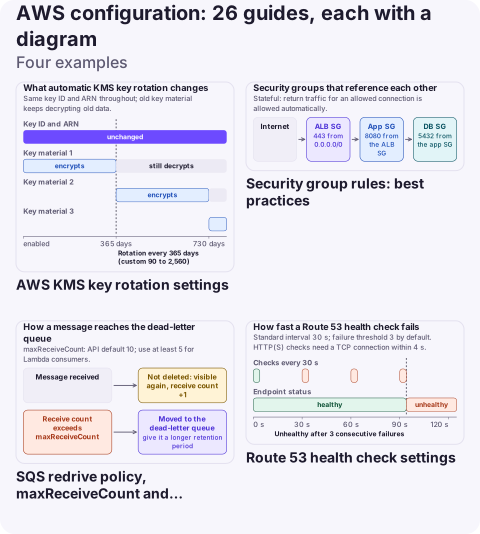
- AWS KMS key rotation settings
- CloudFront cache policy and TTL settings
- CloudWatch Logs retention settings
- DynamoDB Time to Live (TTL)
- ECS deployment circuit breaker
- ECS health check grace period
- ECS memory vs memoryReservation
- ECS minimum healthy percent and maximum percent
- EKS managed node group update settings
- Lambda memory size: choosing the right setting
- Lambda reserved concurrency vs provisioned concurrency
- NAT gateway per Availability Zone (and the regional option)
- RDS backup retention period, backup window and maintenance window
- RDS parameter groups explained
- Route 53 health check settings
- Route 53 TTL settings
- S3 Block Public Access settings explained
- S3 lifecycle rules: settings that matter
- Security group rules: best practices
- SQS redrive policy, maxReceiveCount and dead-letter queue settings
- SQS visibility timeout
- Target group deregistration delay (connection draining)
- Target tracking scaling policies (EC2 Auto Scaling)
- VPC gateway endpoints for S3 and DynamoDB